Fountain pens and inks: a practical starting setup
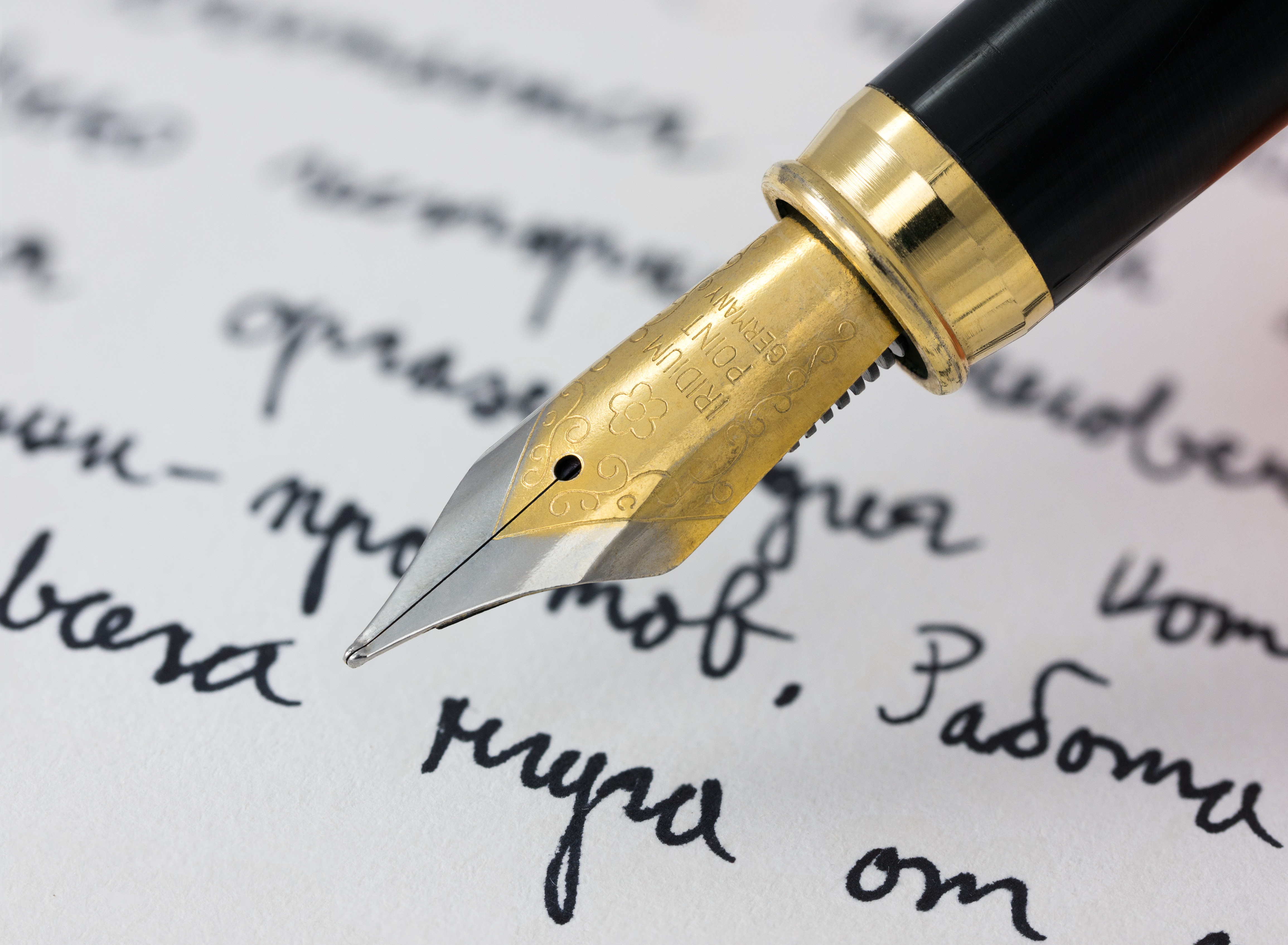
Writing with a fountain pen. Source: Wikimedia Commons.
A fountain pen feeds liquid ink to paper through a nib and a feed, usually drawing from a refillable converter or a cartridge. The general mechanics are covered in the public Wikipedia entry on the fountain pen. This article is narrower: how to assemble a first setup that actually gets used for journaling instead of sitting in a drawer.
Choosing the first pen
For a starter pen, the two decisions that matter most are nib width and filling system. A medium or fine steel nib suits Latin-script handwriting and is forgiving of angle. A converter — a small piston unit that draws bottled ink — is worth having from the start, because it opens up the wider range of bottled inks and is cheaper per page than cartridges over time.
Matching ink to journal paper
The same pen behaves differently on different paper. On softer, more absorbent paper, a wet ink will feather (spread along fibres) and may show through the page. On coated journal paper, the same ink stays crisp but takes longer to dry. There is no single correct pairing; the practical step is to test before committing a whole notebook.
A reliable test strip records four things from one short sample:

A simple cleaning routine
Most pen problems for new users are dried ink, not faulty hardware. A converter pen rinses out in a few minutes:
- Unscrew the barrel and remove the converter.
- Flush cool tap water through the nib and feed until it runs clear.
- Draw clean water in and out of the converter a few times.
- Rest the nib section on a towel overnight to dry before refilling.
Use cool water, never hot — heat can affect some feeds and finishes. If a pen is being stored unused for weeks, empty it first; ink left to dry in the feed is the most common cause of a pen that "stopped working."
Cold-weather note: a pen carried in an outer coat pocket through a Canadian winter can run a little dry until it warms to room temperature. Letting it sit indoors for a few minutes before writing usually restores a steady line.
Building a small ink rotation
Rather than collecting widely, a workable rotation is small: one dependable everyday colour for journaling, and perhaps one second colour for headings or marginal notes. Keeping the rotation short means each bottle gets used before it ages, and it keeps the cleaning routine quick.
Where to read further
For component terminology — nib, feed, converter — the public Wikipedia article on the fountain pen is a neutral reference, and the entry on ink covers the broader material background.